The court has a soundtrack now.
Rhythm & Rally built an entire Los Angeles gathering around live DJs, dancing, and pickleball — started by two friends whose winning shots earned them a nickname before the event had a name.

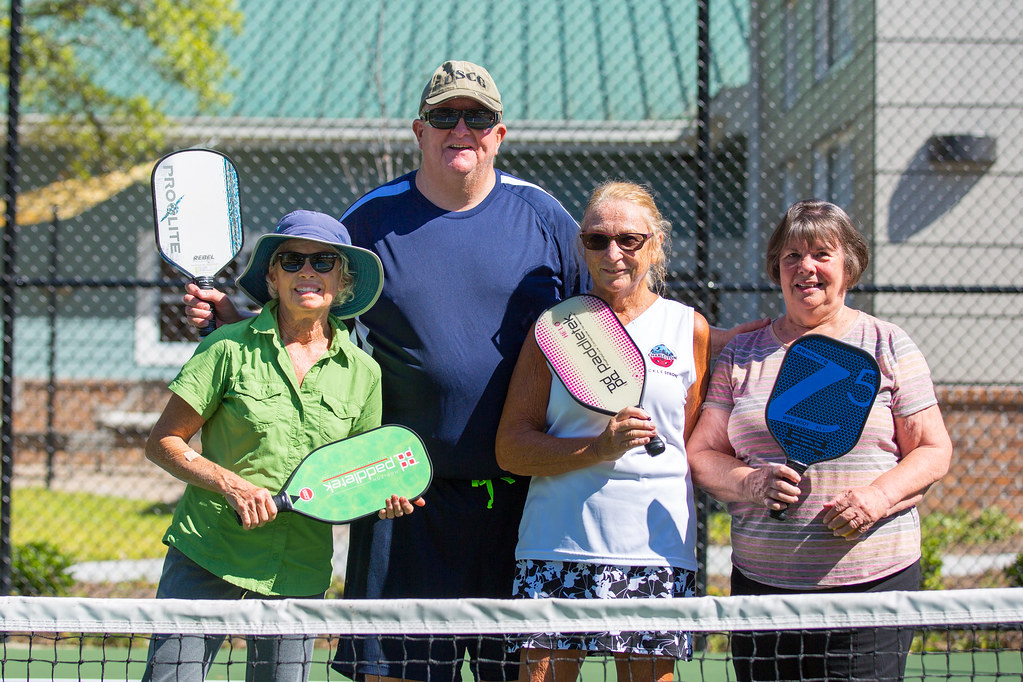
Rhythm & Rally describes itself as "a dynamic fusion of pickleball and community based out of Los Angeles," open to every level, built around live DJs, dancing and drinks alongside the games.1 The origin story behind it is small and specific: two friends, Erial and Chris, started a weekly hitting session about two years ago that grew into a steady crew.
Where the name actually comes from
The group's own account credits Jasmine with coining the term that stuck: she affectionately called their best winning shots "whippies," and the tight-knit crew — Erial, Irie, Jasmine, Christine, Katrina, Ian and Chris — adopted the name for themselves.1 "We are often the most diverse group on the court," the group says of itself today. "We care about bringing inclusivity to the game. We value the intersection of community and sport."1
That trajectory — a private joke between two friends becoming a named identity, then a recurring public event — is a small but genuine origin story for how pickleball's social layer actually grows: not from a marketing plan, but from an inside joke that other people wanted to be part of.
Municipal Planning & Facility Capital Horizons
Beyond the immediate scheduling schedule, this facility illustrates the broader capital equation facing modern municipal planners. Converting public asphalt to dedicated court layouts is no longer an isolated park experiment; it represents a fundamental re-rating of recreational space efficiency.1 Where traditional tennis layouts support four players across 7,200 square feet, a multi-court pickleball footprint accommodates sixteen or more concurrent participants, quadrupling hourly throughput while concentrating court-wear dynamics on high-friction zones.1
For city agencies and concession operators, the ongoing operational bottleneck remains sound ecology and off-peak throughput management. High-frequency paddle impact at 1.2 kHz requires deliberate acoustic buffering, and the surrounding neighborhood stakeholders increasingly demand sound-mitigation curtains, verified decibel monitoring, and structured ladder rotations before greenlighting additional capital permits.1 As public recreation departments balance dedicated access against legacy court reservations, this location serves as a critical benchmark for urban density planning across the regional sports network.1
Sources
Every fact above comes from these public pages. Open the original to check it, or to read further.
- Rhythm & RallyRhythm & Rally: a pickleball jamCaptured Sep 27, 2026
Chapter 07 · CultureRead it in the issue →